An investigational, non-surgical option some adults explore for rotator cuff tendon problems, partial tears, shoulder arthritis, or before deciding on shoulder surgery. A physician decides whether it is appropriate after reviewing your history and imaging. Not FDA-approved; results vary.
An injection of mesenchymal stem cells (MSCs) into the shoulder joint or around the rotator cuff, with exosomes in the Restore and Renew packages. It is not surgery.
Adults with rotator cuff tendon problems or partial tears, shoulder arthritis, or who want to understand options before shoulder surgery.
Three packages from $3,744 to $12,444 USD, including hotel and ground transport.
Usually one night. You fly into San Diego; the clinic is in Tijuana.
Investigational and not FDA-approved. Offered at a COFEPRIS-licensed clinic in Mexico.
A physician, after reviewing your history and imaging. Not everyone qualifies.
Patients usually come to us after rest, exercise, physical therapy, medication, or injections have not helped as much as they hoped. Our physicians most often evaluate four situations:
Tendon irritation, wear, or partial tears of the rotator cuff that have not improved with rest or physical therapy. The research in this area is small, so expectations should be modest.
Wear-and-tear arthritis of the shoulder joint, with pain or stiffness that limits reaching, lifting, or sleep. Research on stem cell injections for shoulder arthritis is limited.
Long-standing shoulder pain from wear and tear, or limited range of motion, when other treatments have not helped as much as hoped.
Adults who have been told shoulder surgery may be in their future and want to understand non-surgical options first. A complete rotator cuff tear that needs repair is generally a question for an orthopedic surgeon, and an injection is not a substitute for repair.
When it may not be appropriate. Our physicians may advise against treatment for complete rotator cuff tears that need surgical repair, advanced joint destruction or severe instability of the shoulder, an active infection in or around the shoulder, or certain uncontrolled medical conditions. A medical evaluation is always required first.
It is an injection, not surgery. A physician injects a preparation of mesenchymal stem cells (MSCs) into the shoulder joint or around the rotator cuff tendon, using ultrasound or imaging guidance, usually during a single clinic visit. In the Restore and Renew packages, the preparation also includes exosomes, the tiny signaling particles that cells release.
What researchers think it does. MSCs are thought to act mainly by releasing signals that may help calm inflammation and support the tendon’s and joint’s own repair processes. Whether injected cells heal torn tendons or rebuild cartilage in people has not been shown.
What studies measure. Clinical studies mostly measure pain, function, and range of motion. In a small placebo-controlled trial in partial rotator cuff tears, patients who received saline improved too. Results vary and are not guaranteed.
Where the cells come from. Your physician will explain the source of the cells in your preparation and how they were screened and tested, and you can ask to see that documentation before treatment. For background, read what stem cells are and how exosomes are studied.
Stem cell therapy is one option among several. This is a general overview, not medical advice; your physician can explain which options fit your shoulder.
| Option | What it involves | Things to know |
|---|---|---|
| Exercise & physical therapy | Strengthening and range-of-motion work for the rotator cuff and shoulder blade, often guided by a physical therapist. | Commonly recommended as a first step for many shoulder problems. It takes time and consistency. |
| Cortisone injection | An anti-inflammatory steroid injected into or around the shoulder. | May ease pain for a period of time. How often it can be repeated is a question for your doctor. |
| PRP or hyaluronic acid | Platelet-rich plasma made from your own blood, or a lubricating gel, injected into the shoulder. | Widely offered, with mixed research results. Often not covered by insurance. |
| Stem cell therapy (MSCs) | Mesenchymal stem cells, with or without exosomes, injected into the shoulder in a single visit. | Investigational and not FDA-approved. Small trials so far have not shown a clear benefit over placebo or over surgery alone. |
| Shoulder surgery | Rotator cuff repair, or shoulder replacement for advanced arthritis. | Established options for complete tears and advanced arthritis, with a longer recovery and rehabilitation period. |
Overview for education only. Results of every option vary from person to person.
Three published packages, priced as ranges in U.S. dollars. Every package includes premium hotel accommodation and airport and border transportation; you book your own flight to San Diego.
A focused starting protocol
25M–75M MSC$3,744–$5,544
Our recommended protocol
100M–125M MSC + exosomes$6,444–$7,544
Our most comprehensive protocol
150M–300M MSC + exosomes$8,444–$12,444
Prices are in U.S. dollars. Your final price depends on your physician’s evaluation, including the cell dose and the number of areas treated. Results vary from person to person, and no specific outcome is guaranteed. Stem cell and exosome therapies are investigational and not FDA-approved. MSC means mesenchymal stem cells; M means million cells.
Compare U.S. and Mexico costs and what drives price
Not sure whether this applies to your shoulder? Candidacy is determined by medical review of your history and imaging, not by a form. The consultation is complimentary.
See If You QualifyYou fly into San Diego and the clinic is in Tijuana, just across the border. Most patients stay one night.
Share your history and any recent X-ray or MRI. A physician reviews your case and, if you may be a candidate, you receive a personalized plan and price.
You book your own flight to San Diego. Bring a valid passport or passport card for the border crossing.
We pick you up and provide private transportation across the border to Tijuana.
Your physician confirms the plan in person and performs the injection at our COFEPRIS-licensed partner clinic.
Most patients stay one night in a premium hotel, included in every package.
We drive you back to San Diego for your flight home. Aftercare and follow-up continue after you return.
Exact inclusions and your schedule are confirmed during your consultation. For a step-by-step look at the visit, read what to expect.
Your case is reviewed by independent, licensed physicians in Tijuana who work with Gold Standard Regenerative.
Founder and Medical Director, Carabella Clinic, Tijuana
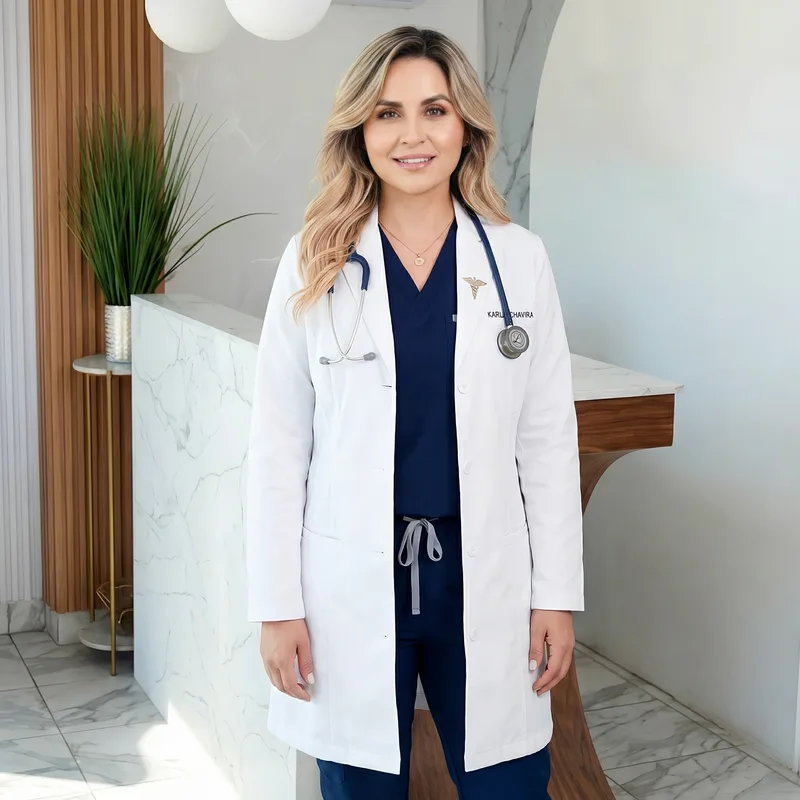
Mexican-licensed physician (Cédula Profesional on file) · Regenerative medicine
Dr. Chavira practices stem cell therapy and regenerative medicine, with extensive consultation experience for patients exploring options for joint-related concerns.
Meet Dr. Chavira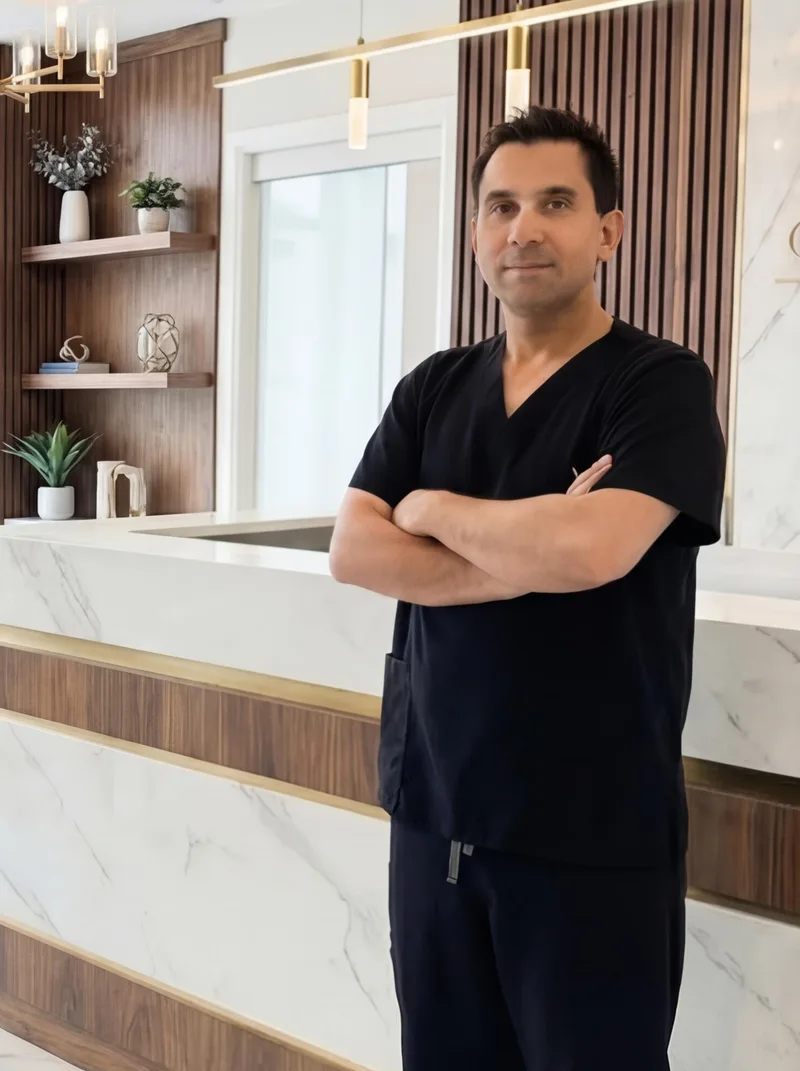
Mexican Board Certified Plastic Surgeon · ASPS & ISAPS Member · Regenerative medicine
Dr. Caloca brings stem cell therapy experience alongside his surgical practice and a commitment to individualized care.
Meet Dr. CalocaWe partner with a COFEPRIS-licensed clinic in Tijuana. COFEPRIS is Mexico’s federal health regulator. Gold Standard Regenerative coordinates your consultation, travel, and care; all medical services are provided by independent licensed physicians. Learn more about COFEPRIS and regenerative medicine regulation.
Questions worth asking any shoulder stem cell clinic, including us:
Regenerative treatment for shoulder and rotator cuff conditions is investigational and is not approved by the U.S. Food and Drug Administration for this use. Research in the shoulder is at an earlier stage than the corresponding work in the knee, so it is worth understanding what it does and does not currently show.
A 2025 systematic review in JSES Reviews, Reports, and Techniques examined mesenchymal stem cells used alongside rotator cuff repair surgery across five studies and 228 patients. Adverse events were somewhat more frequent in treated patients, but the difference was not statistically significant and all of them resolved, with no difference between groups in severity or recovery time. In a separate randomised trial, side effects were limited to mild injection site pain lasting two to three weeks, with no lasting complications.
A 2022 randomised, double-blinded, placebo-controlled trial in Scientific Reports followed 23 patients with partial tears of the supraspinatus tendon for two years. Pain improved across every group in the study, including the group that received saline, and the difference between them was not statistically significant. In the 2025 review, adding cells to surgical repair likewise produced no significant difference in pain, function or range of motion compared with repair alone. The one favourable finding was a lower retear rate, 13 percent against 56 percent at ten years, in a single study.
The review's authors rated the overall quality of the evidence as very low. They noted wide variation between studies, sample sizes small enough that a real effect could be missed, and described the literature as "still preliminary." That caution applies in both directions: these trials are not large enough to establish a benefit, and they are not large enough to rule one out. The retear finding rests on the same limited evidence and is best read as a question worth studying rather than a settled result.
What that means in practice: the safety signal so far is reassuring, effectiveness in the shoulder is not established, and no honest account of this research can promise that a shoulder will improve. Whether any of it is appropriate for you is a decision for a physician who has reviewed your imaging and history, and for some shoulders the right answer will be surgery or conservative care instead.
Sources: A randomized controlled trial of stem cell injection for tendon tear, Scientific Reports, 2022. The role of injections of mesenchymal stem cells as an augmentation tool in rotator cuff repair: a systematic review, JSES Reviews, Reports, and Techniques, 2025.
All medical treatments involve potential risks and limitations. The side effect most often reported after shoulder stem cell injections has been temporary pain at the injection site. As with any joint injection, there is a small risk of infection.
Recovery. Because it is an injection, most patients travel home the day after treatment. Your physician will give you instructions on activity, lifting, and exercise for the weeks that follow.
Expectations. Any change in symptoms, if it happens, is usually assessed over months rather than days. Stem cell therapy is still an evolving area of medicine, and results are not guaranteed. You can review regulatory information from the U.S. Food and Drug Administration.
Our packages range from $3,744 to $12,444 in U.S. dollars: Foundation ($3,744 to $5,544), Restore, our recommended package ($6,444 to $7,544), and Renew ($8,444 to $12,444). Your final price depends on your physician’s evaluation, including the cell dose and the number of areas treated. Results vary. See full package details.
Every package includes the physician evaluation, the procedure at our COFEPRIS-licensed partner clinic in Tijuana, premium hotel accommodation, airport and border transportation, and aftercare and follow-up. You book your own flight to San Diego. Exact inclusions are confirmed during your consultation.
Most patients stay one night. You fly into San Diego, we drive you across the border to Tijuana, and after your treatment and a night in the hotel we drive you back to San Diego for your flight home. Your exact schedule is confirmed during your consultation.
Often, yes, if your physician recommends it. Treating both shoulders counts as two areas, which usually falls under the Restore or Renew package. Your physician confirms the plan after reviewing your history and imaging.
It may not. Some patients explore stem cell therapy to see whether they can delay surgery, but it has not been shown to prevent or replace shoulder surgery. For a complete rotator cuff tear or advanced arthritis, an orthopedic surgeon’s opinion is often the right next step.
This has not been shown in people. In a small placebo-controlled trial in partial rotator cuff tears, pain improved in every group, including saline, and the difference was not statistically significant. A complete tear that needs repair is a question for an orthopedic surgeon.
Small studies to date suggest stem cell injections in the shoulder are generally well tolerated. The most commonly reported side effect has been temporary pain at the injection site. As with any joint injection, there is a small risk of infection. Your physician reviews the risks that apply to you.
No. Stem cell and exosome therapies for shoulder conditions are investigational and not FDA-approved. In Mexico, they are offered at clinics licensed by COFEPRIS, Mexico’s federal health regulator. Learn more about COFEPRIS regulation.
Most insurance plans do not cover regenerative cell therapies because they are considered investigational and are not FDA-approved. Whether HSA or FSA funds can be used depends on your plan; please confirm with your plan administrator.
Start with the free assessment. It is a few quick questions and takes about a minute, then a member of our team reaches out personally. A physician reviews your history and imaging before anything is recommended, and not everyone qualifies.
The same packages, physicians, and partner clinic apply to each area we treat. Each guide covers who it may suit, cost, the trip, and the research for that area.
If you are dealing with shoulder pain, a rotator cuff problem, or joint degeneration, the first step is finding out whether you qualify. It takes about a minute, and candidacy is always determined by a physician.
See If You Qualify →